Daili - Daily Language Immersion
Position
Product Manager
Timeline
July 2025 - December 2025
Skills
Product Management
Entrepreneurship
Branding
Agile
Tools
Notion
Figma
Framer
01 Overview
02 Process
03 Takeaways
01 | Overview
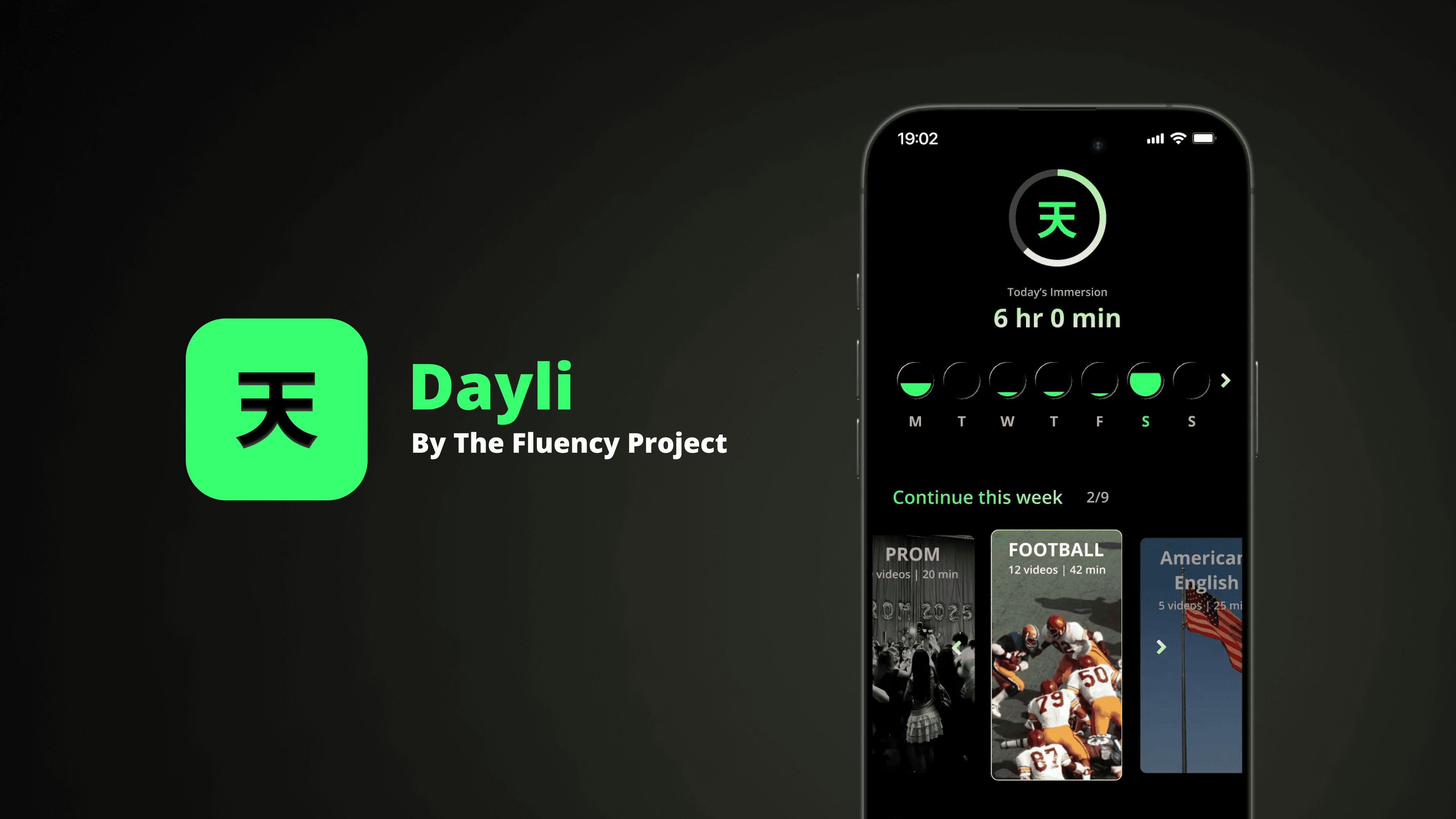
Dayli is a language learning platform that integrates daily language immersion and is a project of The Fluency Project.
I served as Product Manager alongside 3 Product Designers for Dayli in partnership with Innovative Design at USC. Over 6 months (July–December 2025), I led a team of three designers to deliver a comprehensive design system, high-fidelity prototypes, and a live landing page while navigating a mid-project pivot that fundamentally reshaped the product vision.
The Problem
The Fluency Project approached Innovative Design with a vision to help beginner language learners (Spanish, French, Korean) build fluency through immersive, personalized content. The initial concept centered on Amiko, an animated AI speaking buddy designed to engage users in conversational practice.
However, halfway through the project, The Fluency Project's CEO made a critical pivot. After evaluating early prototypes and user feedback, he realized that an AI-driven conversational interface created a barrier rather than a bridge for early learners. Language learning is deeply human, and the AI felt inauthentic. The new vision, Dayli, shifted focus to structured lessons built from short-form, real-world content tailored to each user’s level and interests. The motto became:
“Grow a little more fluent every day with your daily dose of immersion.”
This pivot meant starting from scratch at the halfway point with new features, new user flows, new branding all while maintaining our December deadline.
02 | Process
Agile Team Management
I structured the team using Agile sprints with clear role distribution:
Designer 1: Landing page development in Framer
Designer 2 & 3: Branding, app prototypes, and user flows
All team members: Collaborative design system development
I facilitated weekly standup meetings with the company's CEO for design critiques and feedback loops, ensuring alignment between product vision and execution.
Managing the Pivot
The pivot was the defining challenge of this project. When The Fluency Project introduced the new direction in early November, I took three immediate actions:
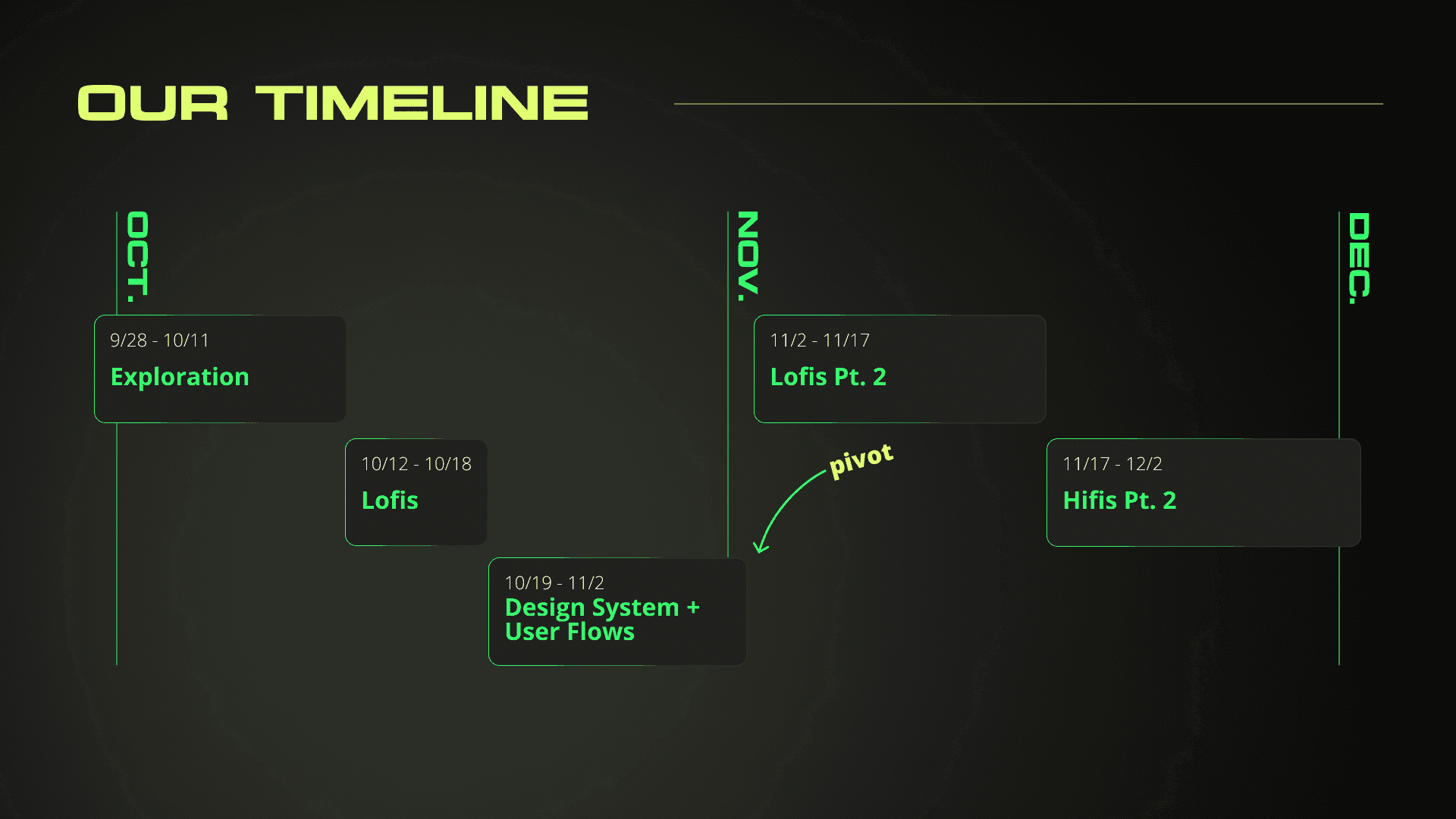
Re-scoped the roadmap — I updated the sprint schedule to accommodate the shift, extending the “Design System + User Flows” phase (Oct 19 – Nov 2) to absorb foundational work that could carry forward, then created a compressed timeline for “Lofis Pt. 2” (Nov 2 – Nov 17) and “Hifis Pt. 2” (Nov 17 – Dec 2).
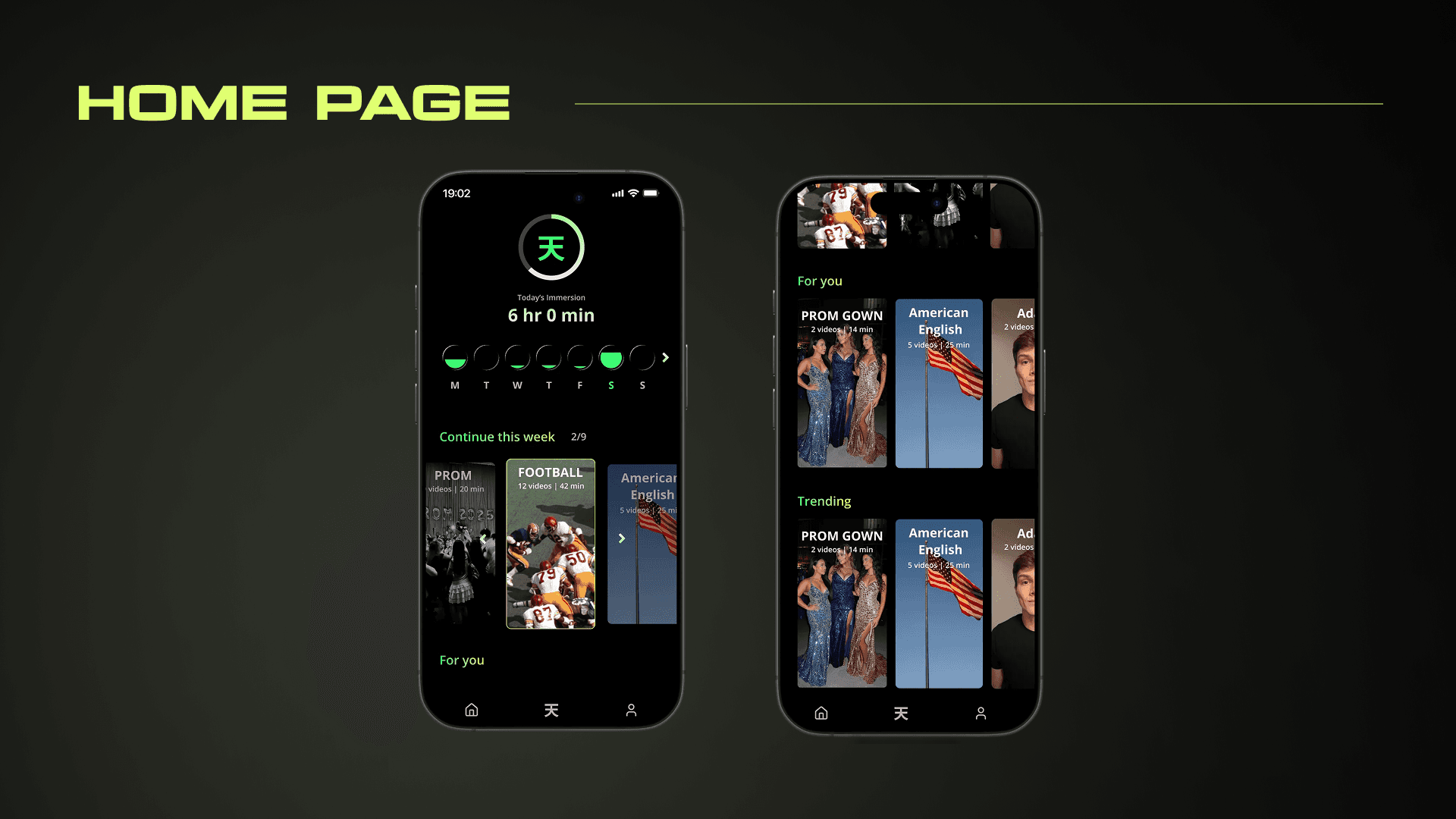
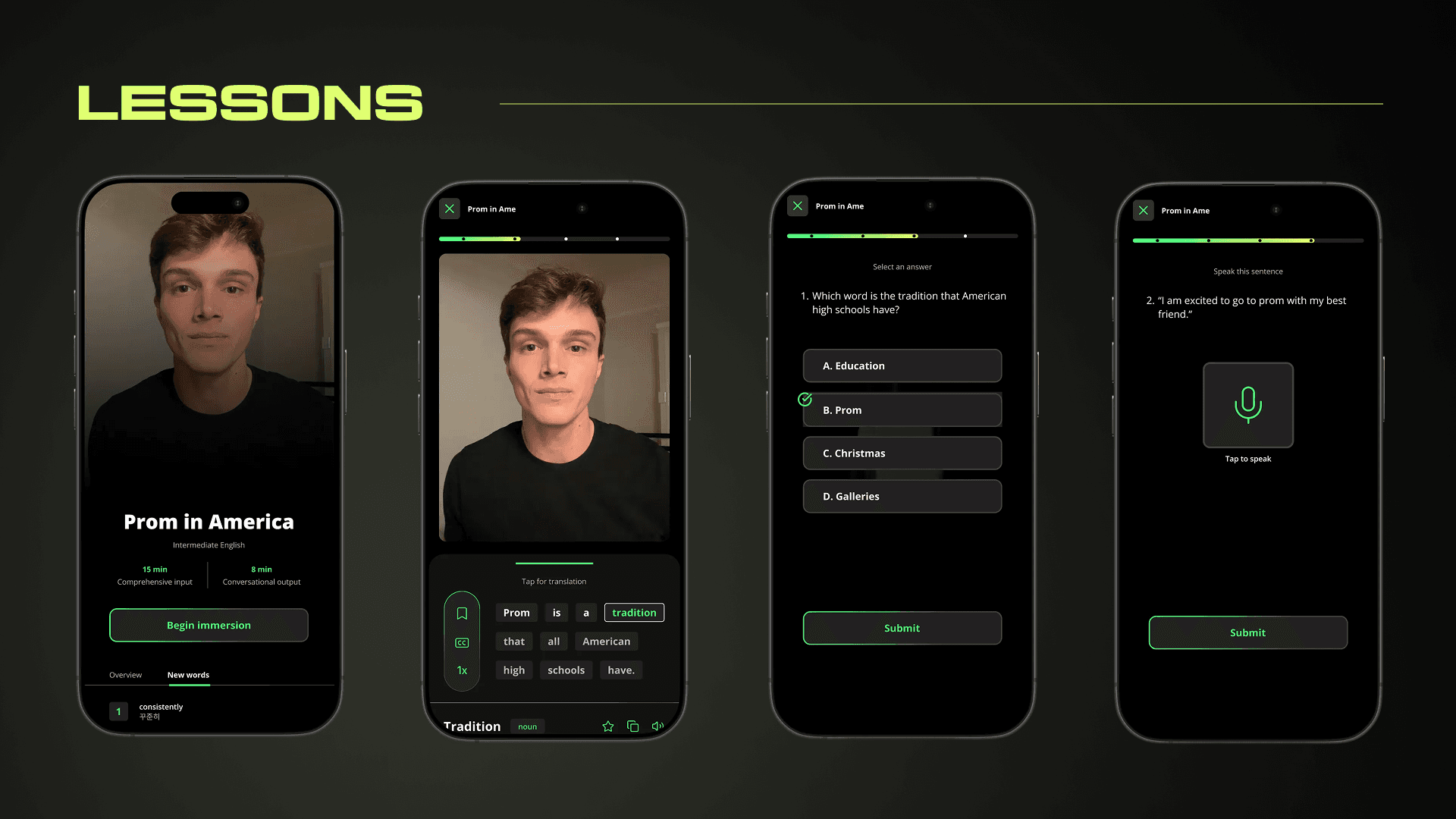
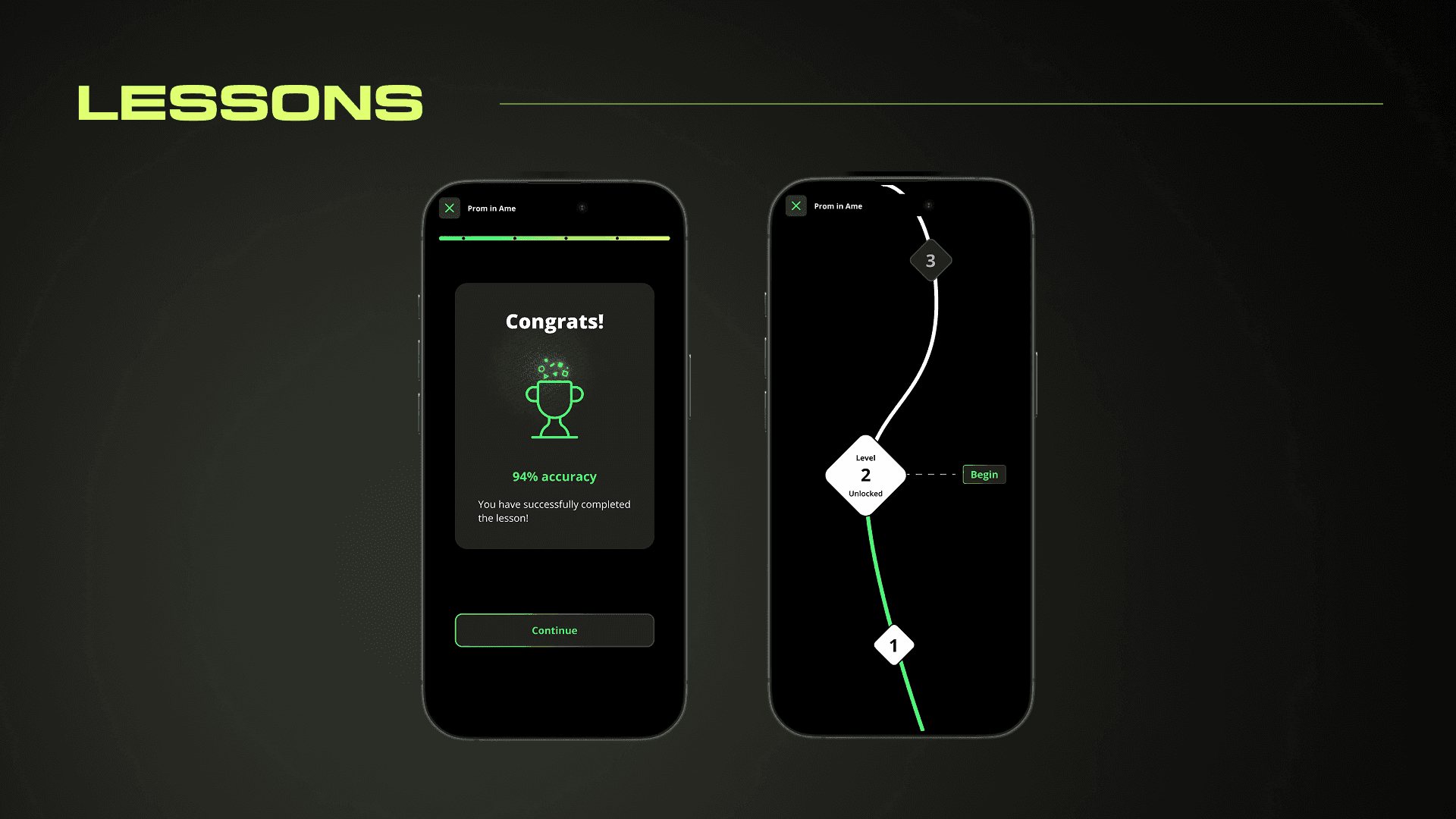
Adjusted deliverable expectations — I worked directly with the client to clarify what was realistic given the time crunch. We prioritized the core lesson flow (listening and speaking modules) and home page experience over secondary features like progress tracking or social components.
Redistributed tasks strategically — I reassigned branding work earlier in the timeline to create breathing room for prototype iterations, and ensured the design system was modular enough to support both Amiko and Dayli concepts during the transition.
Design Thinking & Collaboration
While my role was PM-focused, I stayed deeply embedded in the design process. I contributed to:
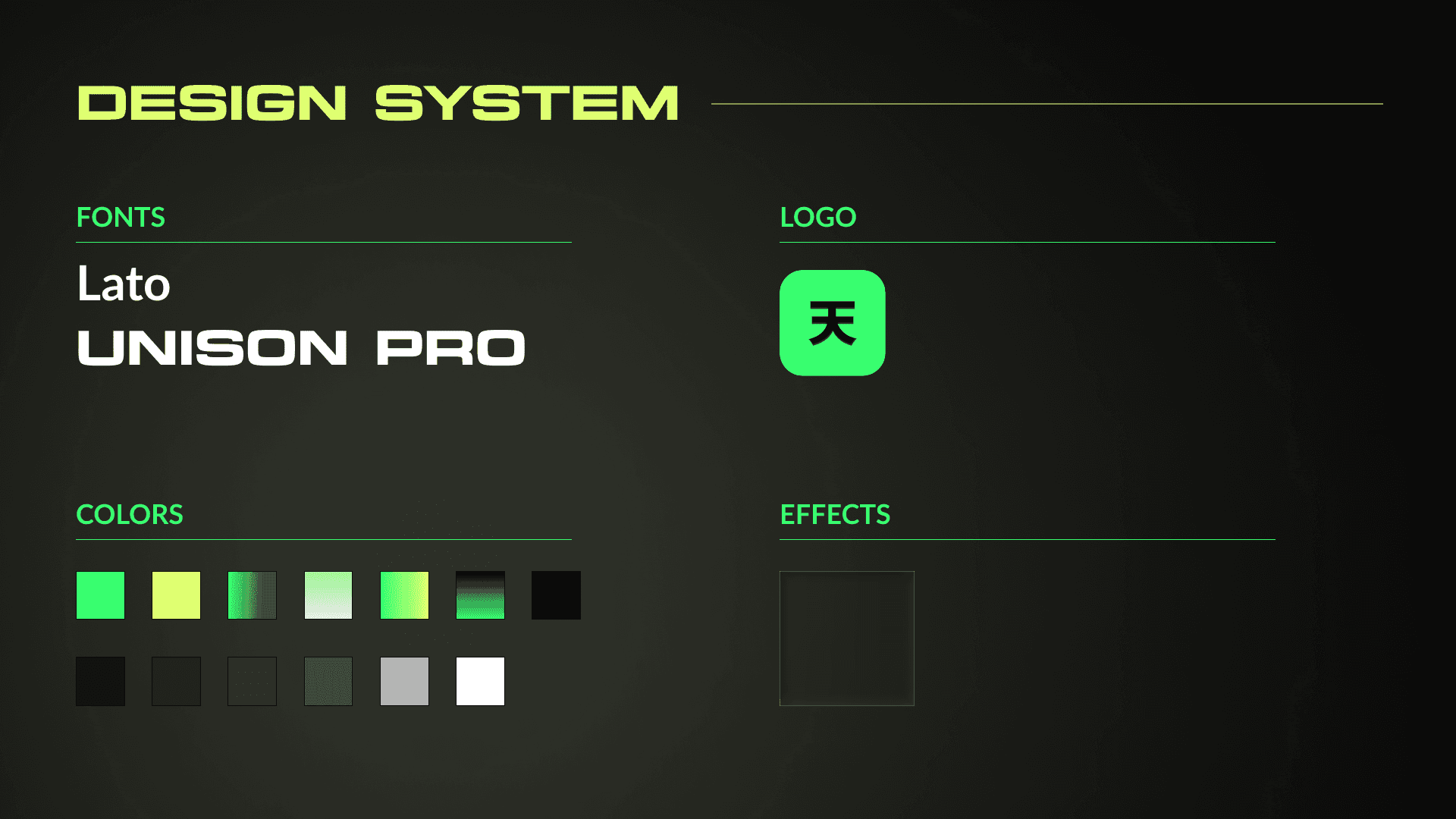
Design system architecture — I helped structure the system to include layout, typography, colors, iconography, effects, logo, buttons, controls, navigation, cards, tables, modals, pop-ups, banners, messaging, and illustrations. This modularity allowed us to swap out Amiko-specific elements for Dayli’s lesson-focused UI without rebuilding from scratch.
User flow validation — I facilitated design critiques to ensure the lesson flow reflected the client's vision of immersive, bite-sized content. We mapped out how users would receive personalized daily lessons and tested multiple navigation patterns to reduce friction for beginners.
Managing Scope Creep
As the project progressed, the scope consistently expanded. The Fluency Project's CEO's enthusiasm for the product led to feature requests that threatened our timeline. I learned to communicate boundaries clearly, saying yes to strategic additions while deferring non-critical features to a post-launch backlog. This required balancing client satisfaction with team capacity, a skill I refined through direct, transparent conversations during our weekly standups.
03 | Takeaways
This project taught me how to work under pressure and lead with flexibility. The pivot could have derailed our timeline, but by re-scoping quickly, communicating transparently, and staying flexible, we delivered a product that aligned with Adam’s evolved vision.
I also deepened my understanding of balancing client needs with feasibility. Product management isn’t just about saying yes, it’s about knowing when to push back, when to compromise, and how to keep a team motivated when the finish line keeps moving.
Most importantly, I learned that adaptability is a PM superpower. The best roadmaps are the ones you’re willing to rewrite.