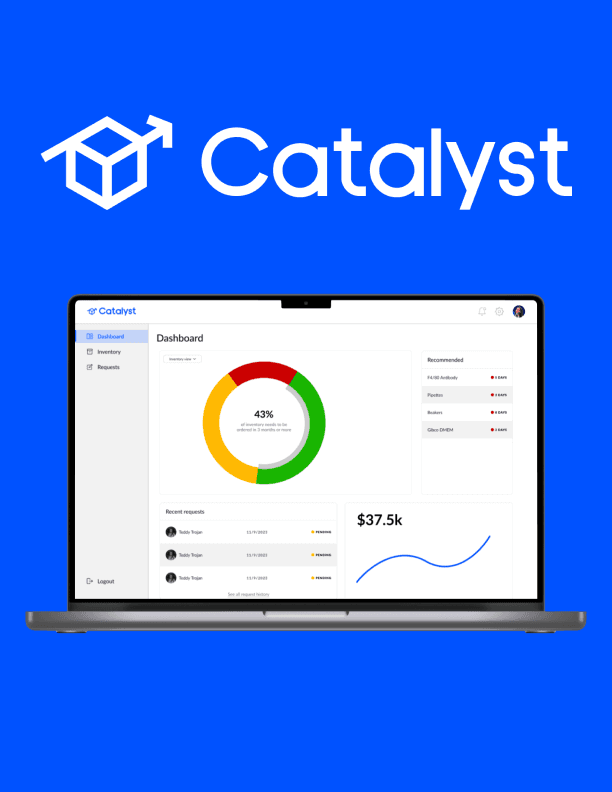
Catalyst - Lab Inventory Management System
Position
Co-Founder and Product Designer
Timeline
August 2023 - December 2023
Skills
Product Design
Pitch Design
UX Research
Branding
Entrepreneurship
Tools
Figma
Procreate
01 Overview
02 Process
03 Takeaways
01 | Overview
Catalyst is an AI-optimized platforms that streamlines and optimizes inventory management for research labs. The product was created in LavaLab, USC’s premier startup incubator.
The Problem
Cluttered inventory management in labs impedes scientific progress. Many researchers are still using pen-and-paper, spreadsheets, and email chains to manage inventory. These forms of cluttered inventory management impede progress and prevent researchers from progressing towards finding cures to change lives.
Product Overview
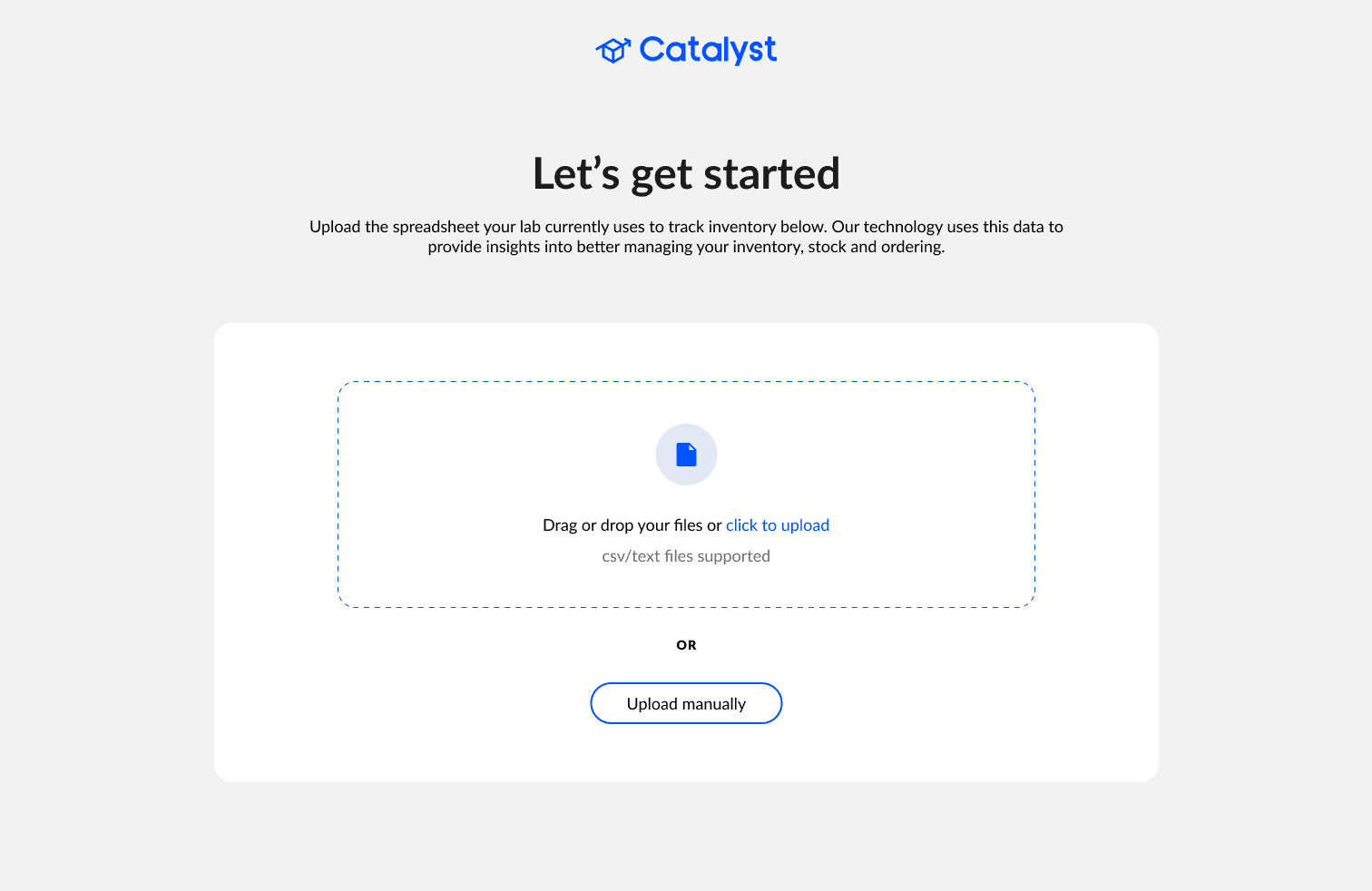
Onboarding: Users can upload their existing inventory data from a CSV, TXT file, or manual input for a smooth onboarding process
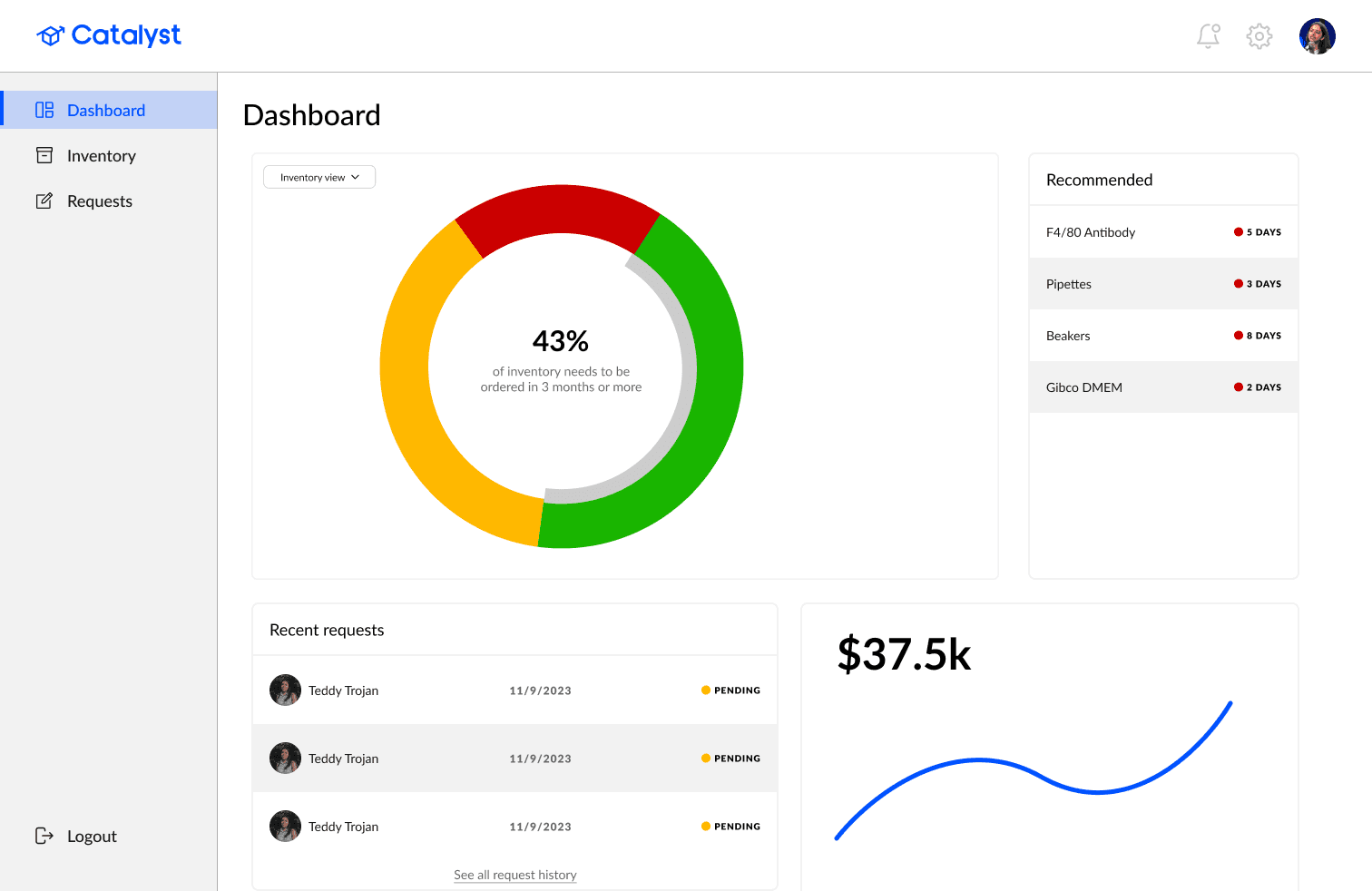
Dashboard: View insights on lab inventory, purchase requests, AI recommendations, and stock notifications at a glance.
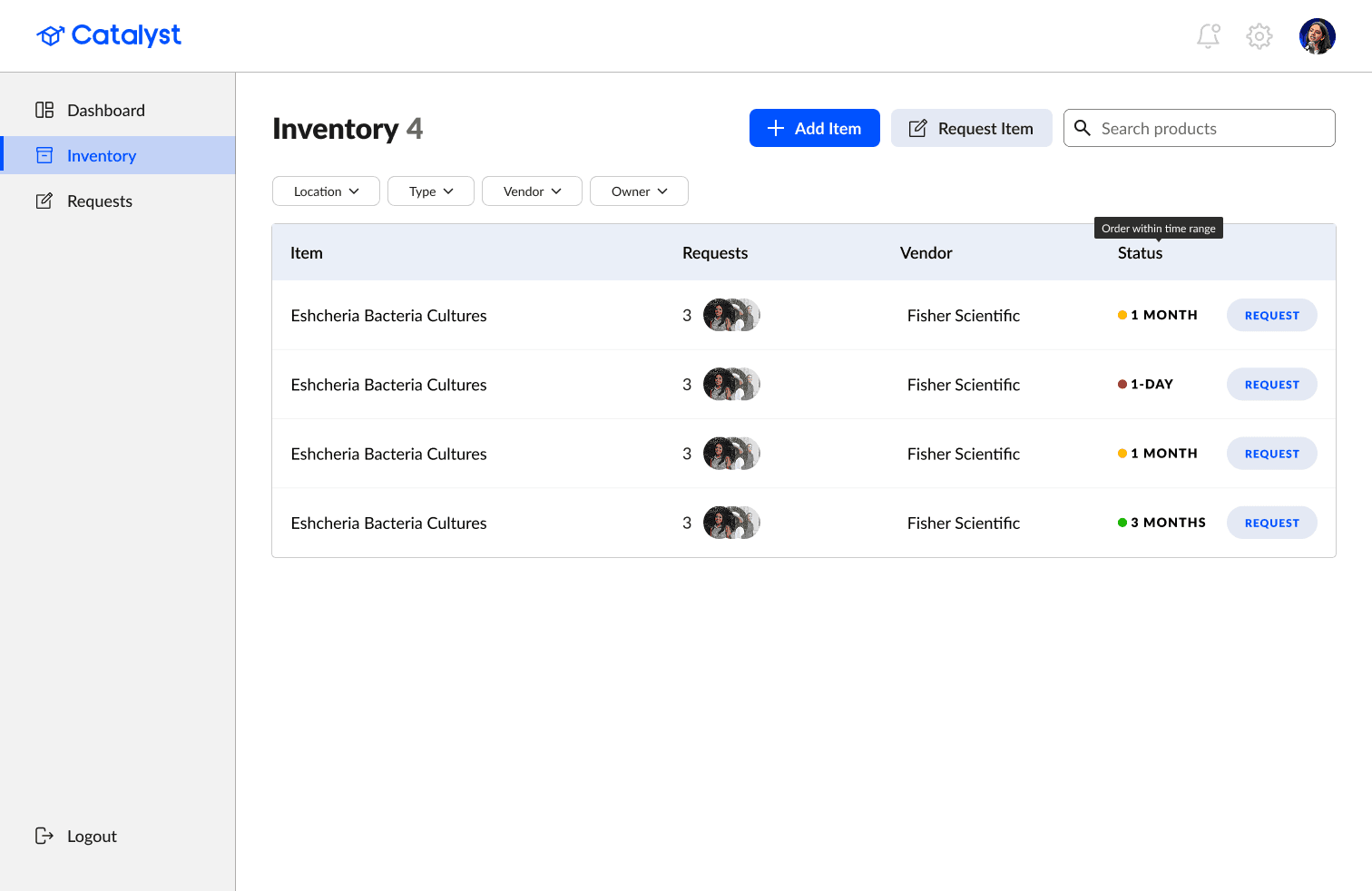
Inventory: Track your inventory and order history in a concise and clear table. Users can request individual or multiple items to be reordered.
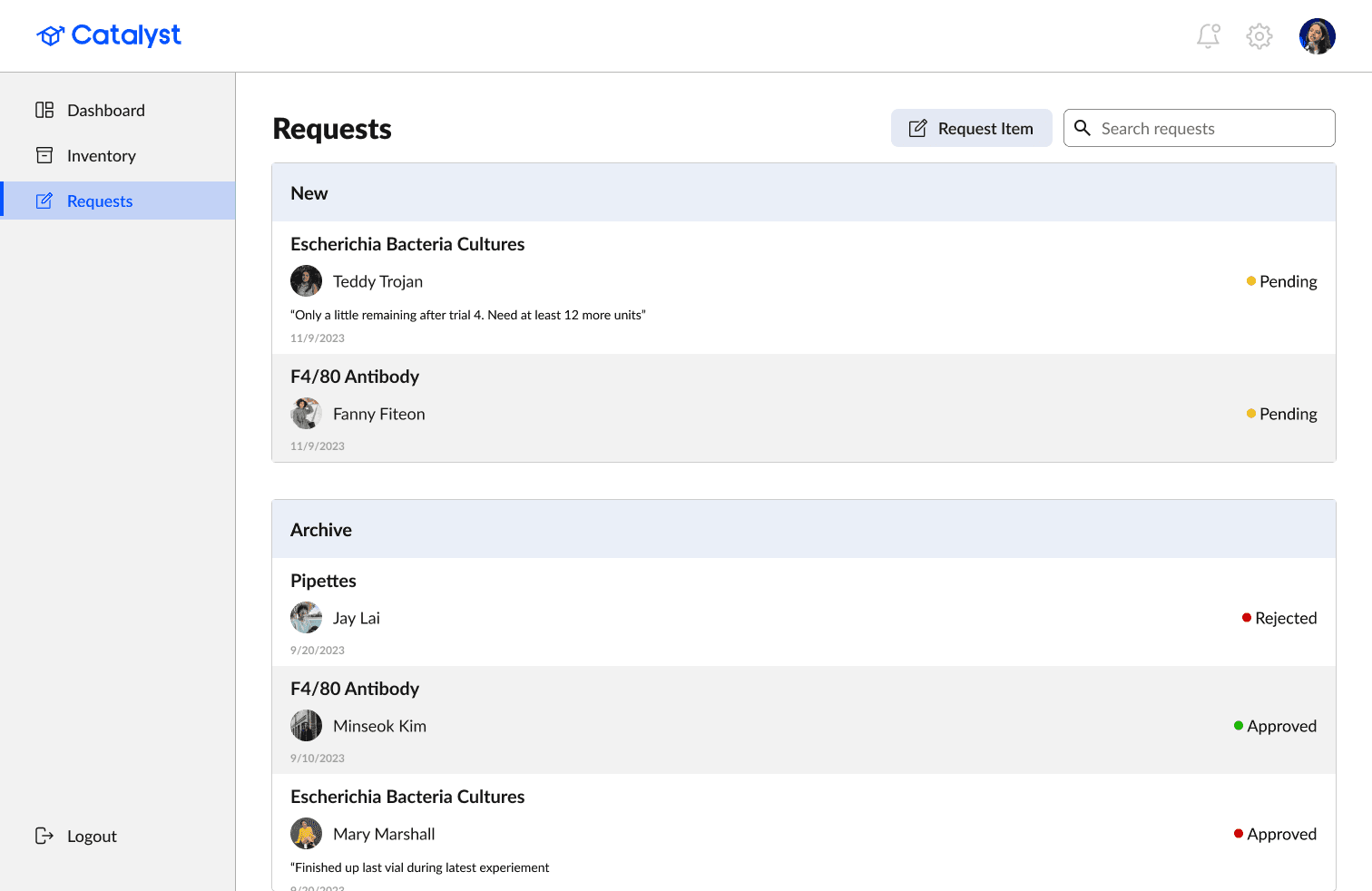
Requests: Monitor and manage all user requests with integrations to top lab suppliers.
02 | Process
User Research
For Catalyst, we interviewed and met with lab workers from USC and small biotechnology startups. With 20+ user interviews and prototype testing, lab researchers and managers all reported similar pain points in their work. We identified three main pain points in their lab inventory tracking workflows:
Inventory Management Systems are Outdated
Requests are Difficult to Track
Orders Have Long Delivery Times
User Profiles and Flows
Catalyst is centered around two distinct user profiles: Researchers and Lab Managers. This allows a straightforward information structure that allows the request and approval process to be facilitated.
Researchers
View inventory
Basic data visualization
Make inventory requests
View order history
Message other users
Lab Managers
All Researcher features
Administrative view
AI recommendations
Approve/reject requests
Advanced data visualization
Place orders
Design Process
With other competitors already existing in the market, besides our unique AI recommendation and inventory optimization, one area where my team wanted to differentiate was in user experience and interface. When approaching the visuals as the sole product designer on this project, my main focus was answering “How might we make the complicated inventory of research laboratories both modern and easily navigable?” The challenge lied in ensuring that all of this extensive and constantly updated data could be represented through not only list views but in data visualization as well with compatibility with the various visual assets coming from external medical resources.
Moodboarding
I began the design process with basic moodboarding to research common design choices for inventory management systems and propose design features for my developers and PM.
Logo Development
As lead product designer for the project, one of my responsibilities was to create the branding for Catalyst as well. The idea for the logo came about from the idea of a centralized place to intake information and convert it to progress. I focused on keeping the logo scalable, modern, and minimalist.
Design System
For the core design system, I established that the project would use Lato as the primary font with white and grey as the primary colors with the blue from the logo as the accent color. Additional colors were also selected for inventory status indication, a key function of our platform.
Initial Prototype
Our timeline for Catalyst was very restrained. We had about 4 weeks from generating the idea for the product to pitching to investors. Thus, I had to dive right into high fidelity prototypes to give my developers enough time to create a working prototype for our demo.
Final Prototype
After conducting user feedback and consulting designers working on other projects within my organization, I rapidly iterated to generate our final prototype. After multiple drafts, I generated a simplified design that was not only less visually cluttered but also met the needs of my developers.
03 | Takeaways
While I cannot squash 6 months of intense work and countless sleepless nights into one case study, I will say that Catalyst was by far my most influential experience thus far as a designer. It was my first real project that pushed me to grow not only my technical skills in UX research, UIUX design, and brand development but my ability to worth with PMs and Devs, business mind, aesthetic sense, and entrepreneurial spirit. Catalyst challenged me to consider a user base (research laboratories) that I was unfamiliar with and utilize the full breadth of the design process to deliver an effective design that users could pick up fluently.
If interested, I would love to discuss more about this experience or my thought process as a designer for Catalyst.